
 العربية
 中文語言
中文語言
 हespañol
 русский
 Português
 Le français
 Deutsch
 Português

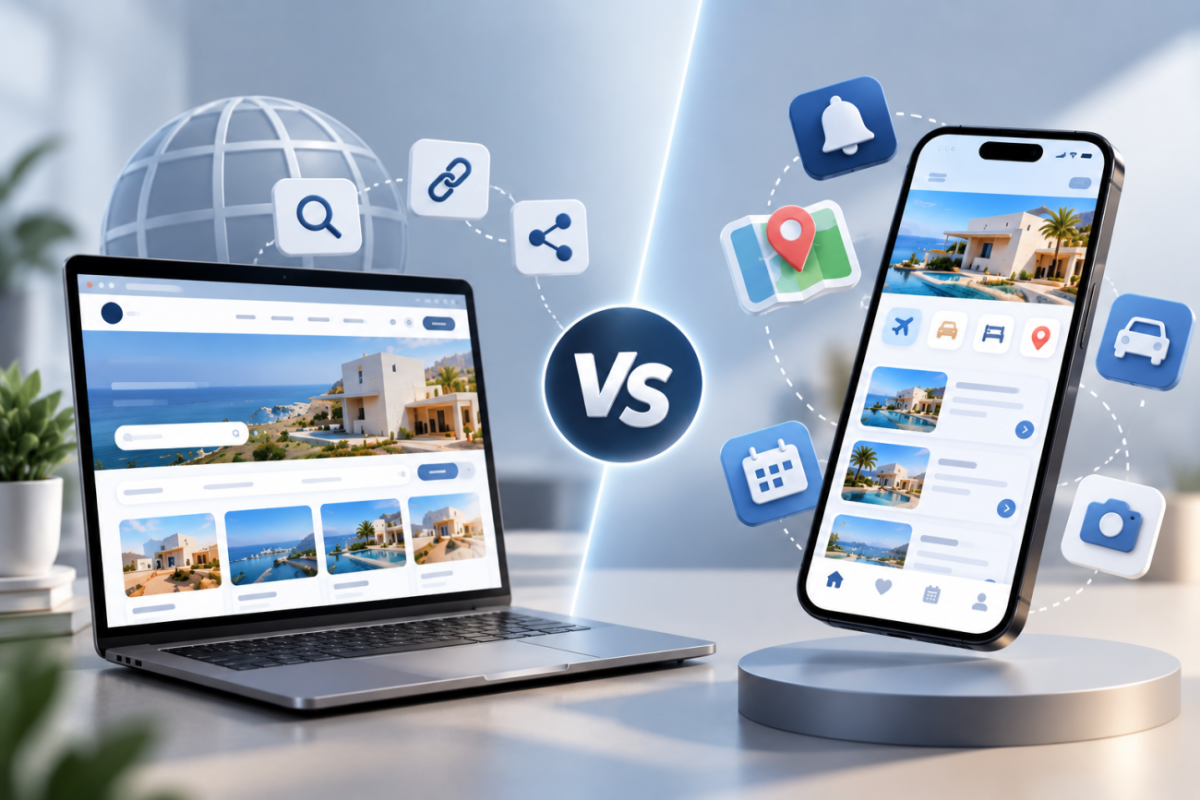
When planning a new digital project, one common question quickly arises: Do we need a website or a mobile app?
The answer is not about which option is more modern. It depends on the nature of the project, how customers will use the service, and the business goals you want to achieve.
For some projects, a website is the best choice. For others, a mobile app is essential. And sometimes, the right solution is to combine both within a single digital ecosystem.
When Is a Website the Better Choice?
A website is ideal when you want to reach the largest possible audience without requiring users to install anything on their devices.
Customers simply open a link and start using the service.
Websites are particularly suitable for corporate websites, e-commerce stores, booking services, service showcases, informational platforms, customer portals, and many other digital services.
A responsive website can also provide an excellent experience across computers, smartphones, and tablets through a single platform.
When Do You Need a Mobile App?
A mobile app becomes more valuable when the service is used frequently or needs deeper access to the capabilities of a smartphone.
For example, an app may be the better option when users need to log in regularly, receive notifications, track orders in real time, use location services or the camera, or perform recurring tasks quickly.
This is why mobile apps are widely used for delivery services, transportation, financial services, and platforms designed for daily or frequent use.
Don’t Make the Decision Based on Appearance
A common mistake is developing an app simply because having one appears more professional.
A company may invest in a complete mobile application only to discover that customers use the service once or twice and that a responsive website could have achieved the same objective with less cost and complexity.
The opposite can also happen. A business may try to deliver a frequently used service through a basic website when users actually need a more integrated mobile experience.
The decision should therefore begin with user experience and the business model, not with the technology itself.
What If Your Project Needs Both?
A website and a mobile app can share the same backend infrastructure, database, and APIs.
A customer might create an account through the website and later use the mobile app while their profile, requests, and data remain synchronized across both platforms.
This approach is particularly valuable when building digital platforms designed to grow and scale over time.
Start With What Your Project Needs Today
You do not necessarily need to build everything from day one.
In many cases, a business can begin with a responsive website or web platform, test the service with real customers, and develop a mobile app later when usage demonstrates a genuine need for one.
This approach helps reduce costs and risks while directing investment toward the features users actually need.
Technology Comes After Understanding the Project
At Mauritanian Digital Solutions Office (RCM), we begin by understanding the project, its users, business processes, and objectives before selecting the appropriate technology.
The right solution might be a website, a mobile application, an advanced web platform, or an integrated ecosystem that combines them and connects with the organization’s other systems and services.
Don’t start by asking: Website or app? Start by asking: What digital experience does the user need to achieve the project’s goal?

Comments
There is no data here up to now
Add New Comment