 العربية
 中文語言
中文語言
 हespañol
 русский
 Português
 Le français
 Deutsch
 Português
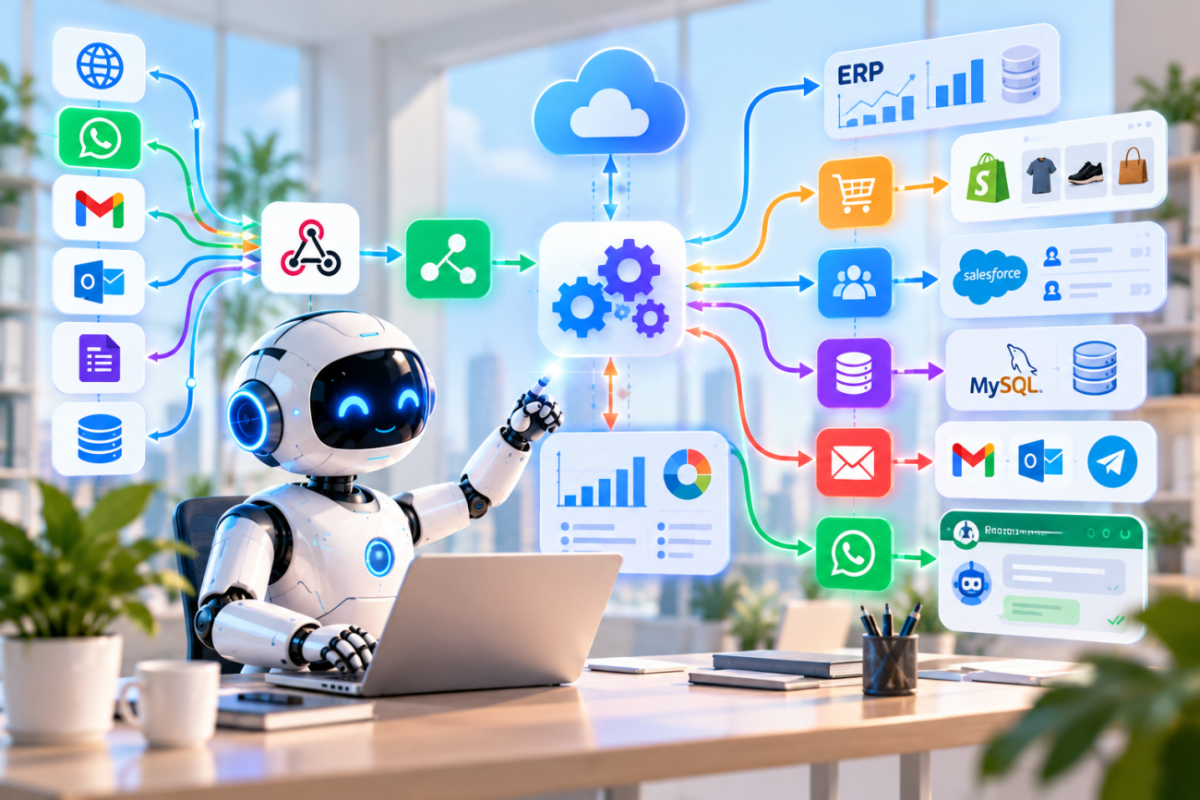
Many organizations rely on multiple software applications and platforms to manage their daily operations. However, when these tools operate separately, teams often have to enter data manually, transfer information between systems, repeat routine tasks, and constantly monitor processes.
At Mauritanian Digital Solutions Office (RCM), we develop automation and integration solutions that enable different systems and services to work together through connected workflows, helping reduce manual work, accelerate operations, minimize errors, and improve operational efficiency.
Turn Repetitive Tasks into Automated Processes
Many daily tasks can be performed automatically instead of being repeated manually.
An automation can start when a specific event occurs, such as receiving a new order, registering a customer, creating an invoice, changing a transaction status, submitting a form, or receiving a message. It can then execute a predefined sequence of actions automatically.
For example, a system can receive customer data from a website, add it to a CRM, create a task for a sales representative, send a notification, and start the follow-up process without manually transferring data between tools.
Workflow Design
We design workflows that connect the different steps of a process into a clear and organized sequence.
A workflow can include triggers, decision conditions, data-processing steps, human approvals when required, and actions performed across different systems.
Workflows can range from simple automations for specific tasks to advanced processes involving multiple stages, systems, and teams.
Systems and Software Integration
When an organization uses multiple systems, integration becomes essential for building an efficient digital environment.
We can connect ERP and CRM systems, websites, applications, e-commerce platforms, booking systems, POS systems, databases, support systems, and cloud services, as well as other solutions whose architecture supports integration.
This allows data and processes to move between systems in an organized way without repeatedly entering the same information on multiple platforms.
API Development and Integration
APIs are among the most important technologies that allow different systems to communicate, exchange data, and execute operations.
We develop and integrate APIs according to project requirements, whether connecting two internal systems or integrating external services with an organization's core platform.
Custom integration layers can also be developed when an organization needs to coordinate communication between multiple systems and services within a unified architecture.
Customer Communication Automation
Communication channels can be integrated into automated business processes, including WhatsApp Business, email, websites, forms, and notifications.
For example, an automated process can send confirmation after an order is submitted, notify a customer when a service status changes, send appointment reminders, route an inquiry to the appropriate department, or initiate a sales follow-up process.
This makes communication part of the workflow rather than a separate activity that depends entirely on manual follow-up.
Sales and Customer Service Automation
Automation can help sales and customer service teams organize processes from the moment a lead arrives through follow-up and service completion.
Customers can be registered automatically, requests classified, tasks assigned, follow-ups scheduled, notifications sent, statuses updated, and information connected to CRM or ERP systems.
When these processes are combined with AI agents, more intelligent workflows can be created to understand certain requests and information and select appropriate actions according to defined rules and permissions.
Internal Process Automation
Automation is not limited to customer-facing processes.
It can also be used for administrative and operational tasks such as generating reports, transferring data, processing forms, updating records, sending alerts, synchronizing information, creating tasks, and managing procedures and approvals.
This helps employees spend less time on repetitive work and focus on tasks that require human expertise and attention.
Integrating Artificial Intelligence with Automation
AI models and agents can be integrated into workflows to perform tasks that require understanding content or analyzing information.
For example, AI can analyze an incoming message, identify the type of request, extract important information, and then route the process to the appropriate workflow or trigger actions across connected systems.
In this way, automation executes the workflow while AI adds the ability to understand and handle information more flexibly.
Human Control and Approvals
Not every process should be fully automated.
Workflows can be designed to pause at specific stages and require employee or management approval before continuing, particularly for financial, administrative, or important decision-making processes.
This allows organizations to benefit from the speed of automation while maintaining human control where it matters.
Automation Designed Around Your Operations
We do not start by choosing a tool and forcing it into the organization's workflow.
We begin by studying the current process, identifying repetitive steps, systems in use, data sources, delays, and points of human intervention. We then determine what can be automated and what requires integration or additional development.
Workflows and integrations are then built around the organization's actual operational processes.
From Separate Tools to an Integrated Ecosystem
At Mauritanian Digital Solutions Office (RCM), we help organizations transform separate applications and services into a more connected digital environment.
Whether you need to connect an ERP system to your website, synchronize data across multiple systems, automate sales and customer service, or build advanced workflows combining systems and artificial intelligence, we design the solution around your needs.
Make your systems communicate, your processes move automatically, and your team focus on the work that truly requires human expertise.